Touch Dirt: How Roping Dummies Keep You Grounded
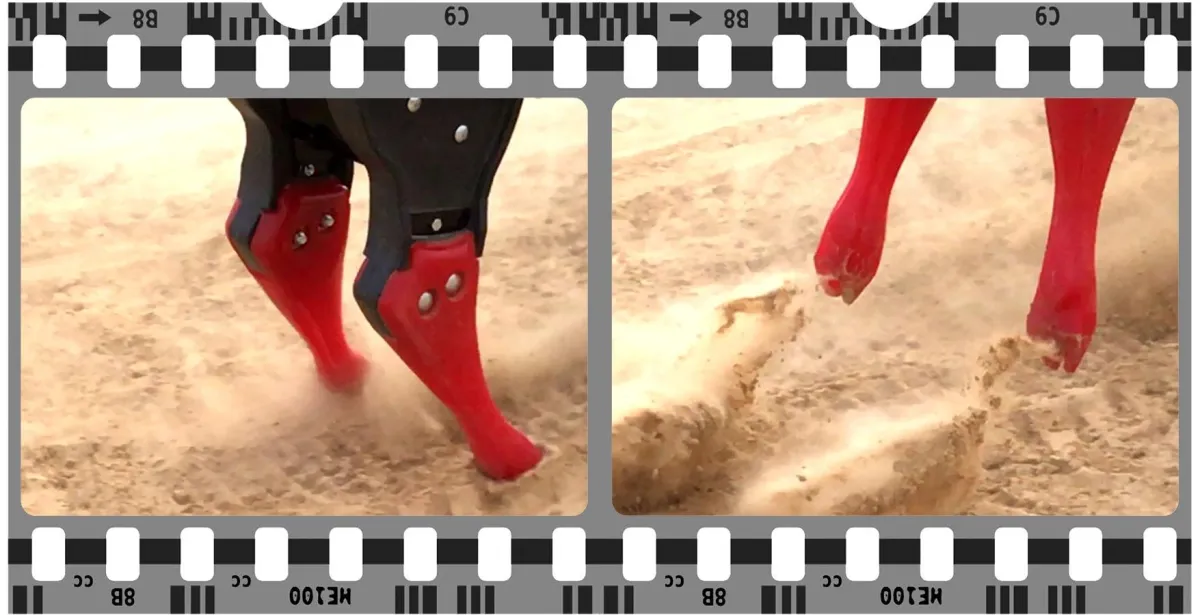
The challenge with a lot of dummies for roping is they let you cheat. We have a lot to say about this because we believe in the best training possible. However, for now we’ll focus on one thing other roping dummies don’t do: touch dirt.
Other roping dummy legs do not touch the dirt, with some of them hovering at least 6 inches above the ground.
The problem is a bit obvious. If the dummy legs are in the air, allowing you to catch when you shouldn’t be, you’re learning to be lazy with your delivery and your timing. The bottom strand isn’t getting low enough, and you’re not learning the visual cues for great timing. For too many team ropers, the cross-over from dummy to live steer can be frustrating.
Serious ropers know they can’t afford bad training. That’s why roping steers are popular. But, of course, they’re expensive, they wear out, and with drought throughout large parts of cowboy country, they’re just not practical for very many. What’s a team roper to do?
Hot Heels dummies are the best roping machines on the market. They’re incredibly durable (many have been going strong for 15+ years) and they never tire. More importantly, with legs that actually touch dirt, hop, and a “Jen stick” that mimics front leg movement, they’re the perfect roping dummy to train champion ropers.
These are not superficial differences. These critical features close loop holes that make roping dummies just too easy, and the transition to real steers harder than it should be.
Timing and Placement
“I’ve listened to a lot of theories, observed and studied roping all my life, and I’ve always said the key that unlocks the door to heeling is timing. Timing is what took me from being just kind of average to being a pretty good heeler overnight.” - Clay O’Brien Cooper, teamropingjournal.com
Once cowboys and girls know the basics of throwing a rope, it quickly becomes about timing and placement. There are two main ways other dummies allow the roper to cheat:
Delivering the bottom strand too high because the legs are always in the air
Timing the delivery whenever the roper wants because there is nothing to simulate the front legs
The Hot Heels CrossFire and Supreme dummies close these loop holes with two critical features:
Legs that touch dirt and force the delivery of the bottom strand down
A “Jen stick” that mimics the front legs, forcing the roper to learn proper timing
Both features work together to master delivery and timing at the same time. The result is much higher quality training that forces good habits and makes the transition to live steers a lot easier.
Visual Cues
The dummies force good timing, but they also help the team roper by giving visual cues. In other words, they hop like a real steer, they extend their legs like a real steer, and they put their hind legs in the dirt like a real steer. The visual is so lifelike that ropers feel like they're chasing a real steer. And they act like it.
It’s important to start the delivery when the legs are down and feet are on the ground, just before the hop. With a dummy that moves like this, learning the visual cues is much more realistic.
Staying Grounded in Good Habits
The advantage, and disadvantage, of a roping dummy is it doesn’t eat, drink, or sleep–and it never tires. So your practice can last as long as your schedule will allow. That means the wrong roping dummy can lock in the wrong habits. The right dummy forces the right habits.
It was the great Vince Lombardi that taught, "Practice does not make perfect. Only perfect practice makes perfect.”
So just like the Hot Heels dummy legs, and the bottom strand of your loop, and your ego when you rope on a real steer, we encourage you to stay grounded in the reality of roping and touch dirt.
